People are no longer relying only on traditional search engines to find businesses, products, and services. AI-powered tools can now answer questions, compare options, summarize information, and recommend businesses directly within the conversation.
This creates a new opportunity for businesses: Generative Engine Optimization (GEO).
GEO focuses on making your business, content, and expertise easier for AI systems to understand, trust, and potentially reference when answering user questions.
In this guide, we'll explain what GEO means, how it differs from traditional SEO, and practical steps businesses can take to improve their visibility in AI-powered search in 2026.
What Is GEO?
Generative Engine Optimization (GEO) is the practice of optimizing digital content so that AI-powered search and answer systems can better understand and use it when generating responses.
Traditional SEO primarily focuses on improving visibility in search engine results pages. GEO adds another layer. Instead of only asking "How can my website rank higher?", businesses increasingly need to consider "How can AI systems understand my business and recognize it as a useful source?"
AI search systems use information from websites, structured data, authoritative publications, reviews, directories, and other sources to build answers. This means your online presence needs to be clear, consistent, useful, and trustworthy.
SEO vs GEO: What's the Difference?
SEO and GEO are closely related, but they focus on different search experiences.
| Traditional SEO | GEO (Generative Engine Optimization) |
|---|---|
| Focuses on search rankings | Focuses on AI-generated answers |
| Keywords are important | Context and entities are important |
| Optimizes pages | Optimizes information and content |
| Search result visibility | Potential inclusion in AI responses |
| Backlinks and authority | Authority, consistency, and trustworthy references |
GEO does not replace SEO. A strong digital strategy in 2026 should support both. SEO helps people discover your website. GEO helps make your business information easier for AI systems to understand and reference.
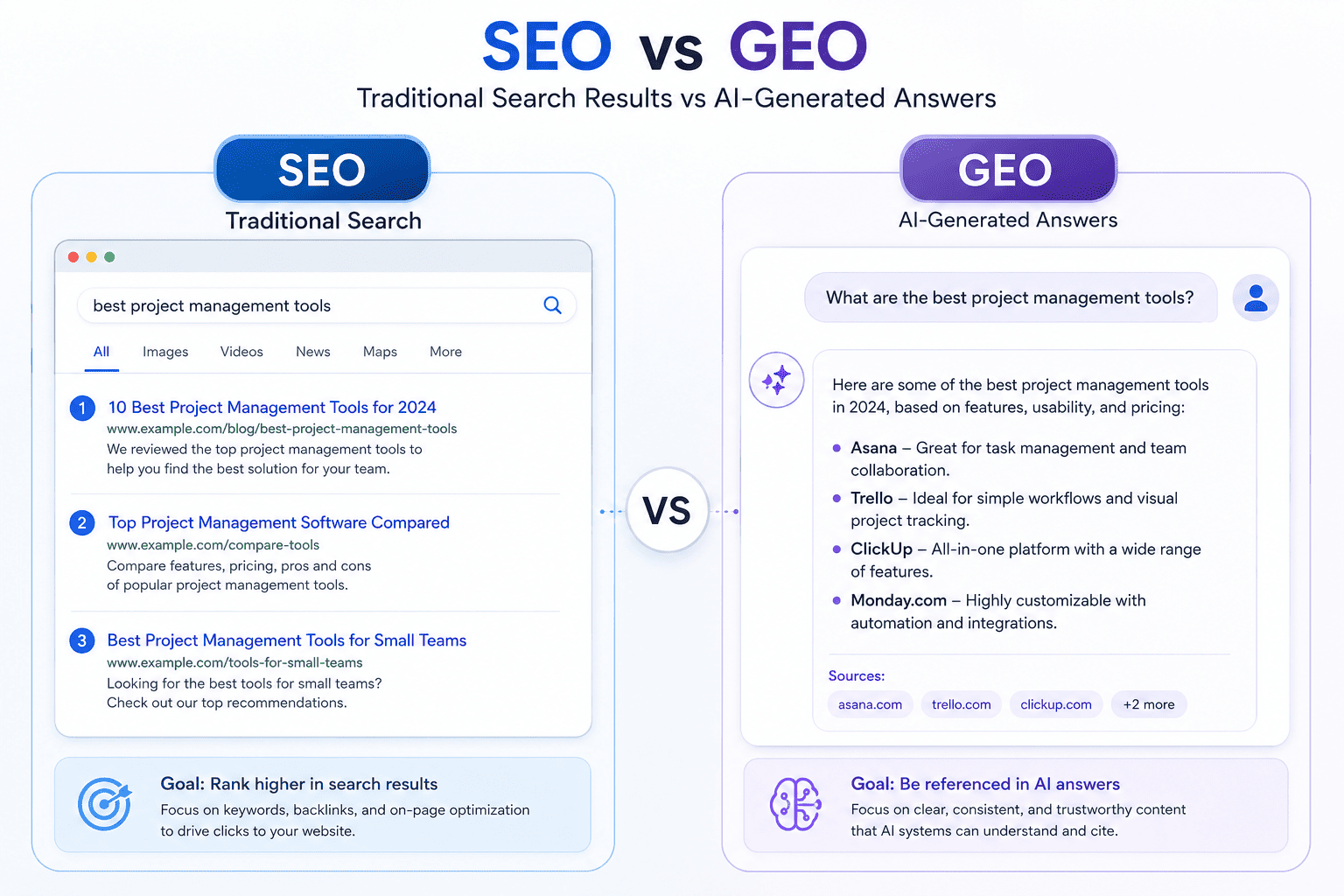
Visual comparison showing traditional search results vs AI-generated answers.
Why GEO Matters in 2026
AI-powered search is changing how people research products and services. Instead of receiving only a list of links, users receive summarized answers with recommended companies, explanations, and supporting information.
This creates a new visibility opportunity. If AI systems can clearly understand your services, capabilities, target audience, locations, and unique expertise, your business has a better foundation for appearing in relevant AI-driven discovery experiences.
7 Practical Ways to Improve GEO
1. Create Clear, Useful Content
Create content that directly answers questions your potential customers are asking. Instead of generic articles on "Software Development", focus on specific titles like "How Much Does Custom Software Development Cost in 2026?" or "How to Choose the Right Technology Stack for an E-commerce Platform". Specific content gives AI systems meaningful details to parse.
2. Answer Questions Directly
AI systems need clear information. Avoid hiding key takeaways behind long intros. Use concise definitions, clear headings, bullet points, FAQs, and step-by-step explanations to make data easy to extract.
3. Build Topic Authority
Publishing one article about a subject is rarely enough. Create related content clusters (e.g., Headless Commerce, E-commerce Architecture, and Case Studies under a central E-commerce topic) to build a strong topical presence.
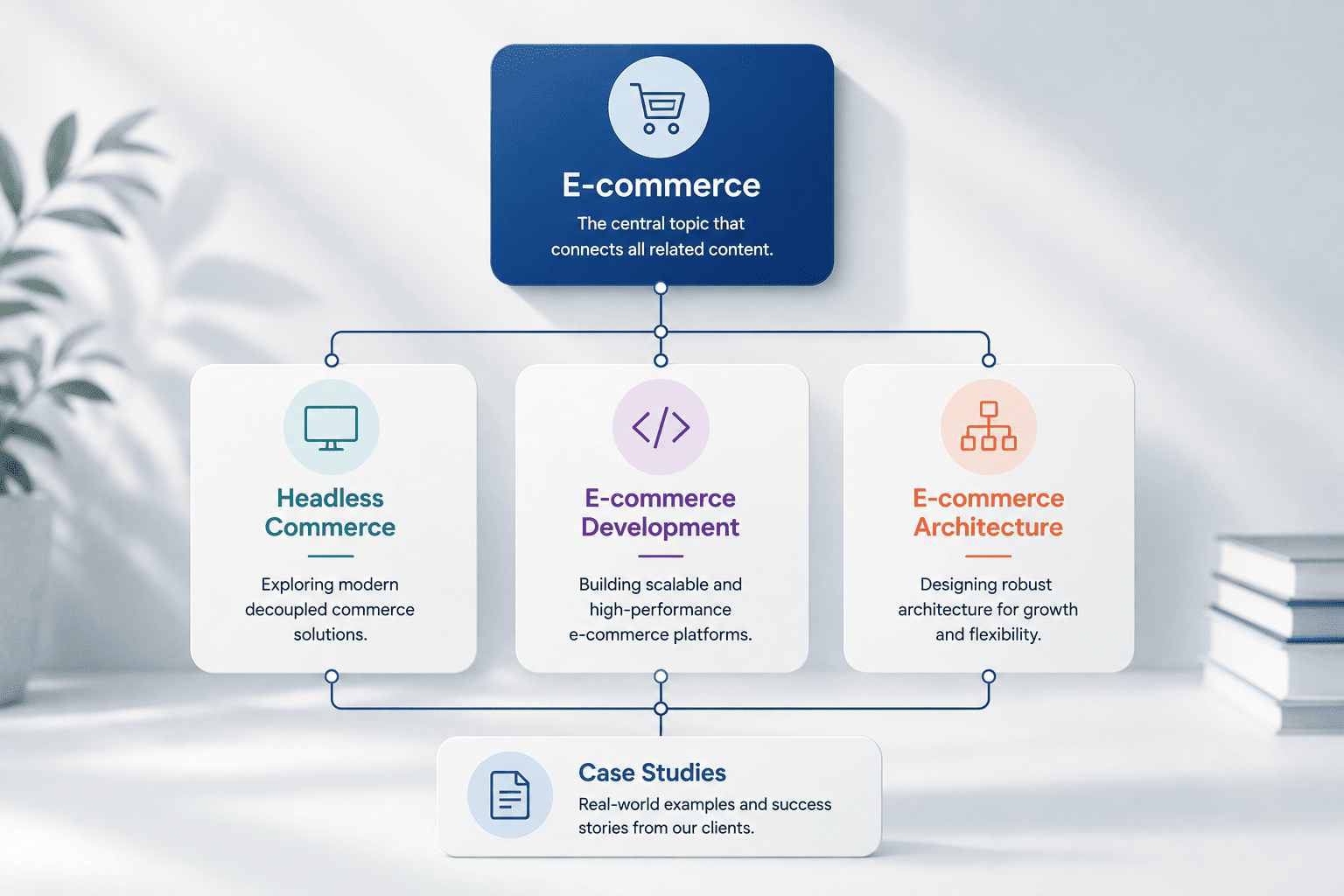
Content cluster showing how multiple related articles build authority around a central business topic.
4. Make Your Business Information Consistent
Ensure details like your company name, services, industry, location, and contact information are identical across your website, directories, and third-party platforms. Inconsistencies confuse AI models indexing your brand identity.
5. Use Structured Data
Implement Schema markup (Organization, LocalBusiness, Article, FAQ, Product, Service) to give search engines and AI agents machine-readable data about your business structure and offerings.
6. Build Real Authority and Trust
Show real technical experience rather than making generic claims. Publish detailed case studies breaking down problem statements, architecture decisions, technologies used, and measurable results. Authentic proof builds trust with both AI engines and human clients.
7. Keep Content Fresh
Technology moves fast. Regularly audit existing pages to update statistics, technology recommendations, code examples, and screenshots to ensure your content reflects current 2026 industry standards.
GEO and Your Company Website
Your website should feature dedicated service pages (e.g., Custom Software, Mobile App, E-commerce, AI Development) structured logically: What you offer → Who it is for → How you work → Technologies → Experience → Results.
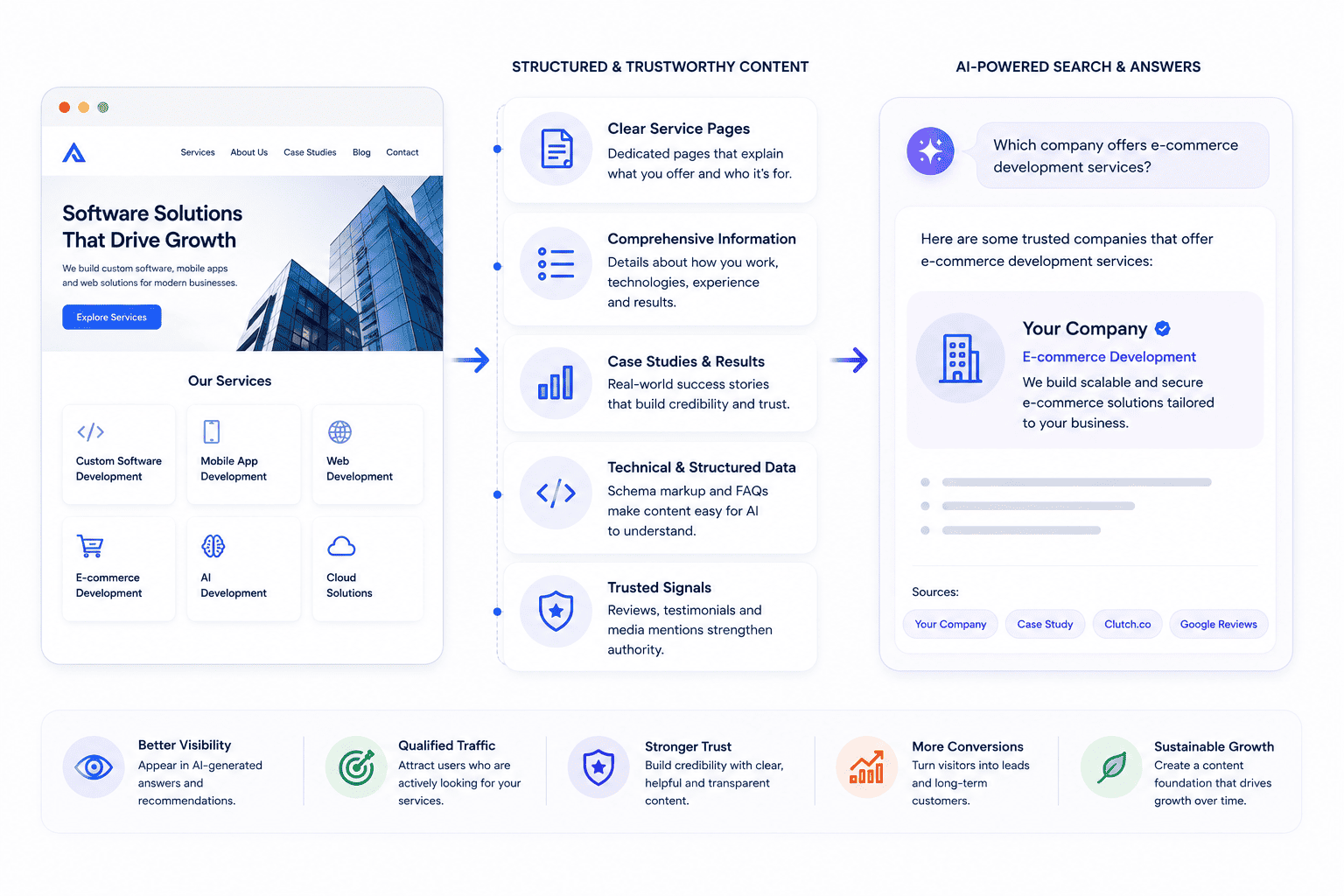
Illustration showing company website, structured content, and trusted sources feeding into AI-powered search.
GEO Is More Than Adding Keywords
AI systems look for deep context, not keyword density. Repeating phrases like "best software development company" won't work. Instead, provide detailed content on software architecture comparisons, development cost guides, and implementation frameworks to become a recognized knowledge source.
Common GEO Mistakes to Avoid
- Publishing Unedited AI Content: Mass-producing generic AI text dilutes brand quality and authority.
- Keyword Stuffing: Overusing keywords ruins readability without helping AI understanding.
- Making Unsupported Claims: Avoid unverified hype like "industry-leading" without providing evidence or data.
- Ignoring Technical SEO: Fast page load speeds, clean site architecture, and structured data remain vital.
The Future of Search Is Conversational
As search moves toward multi-turn conversations, the objective is to build a digital presence that AI engines can easily reference and recommend.
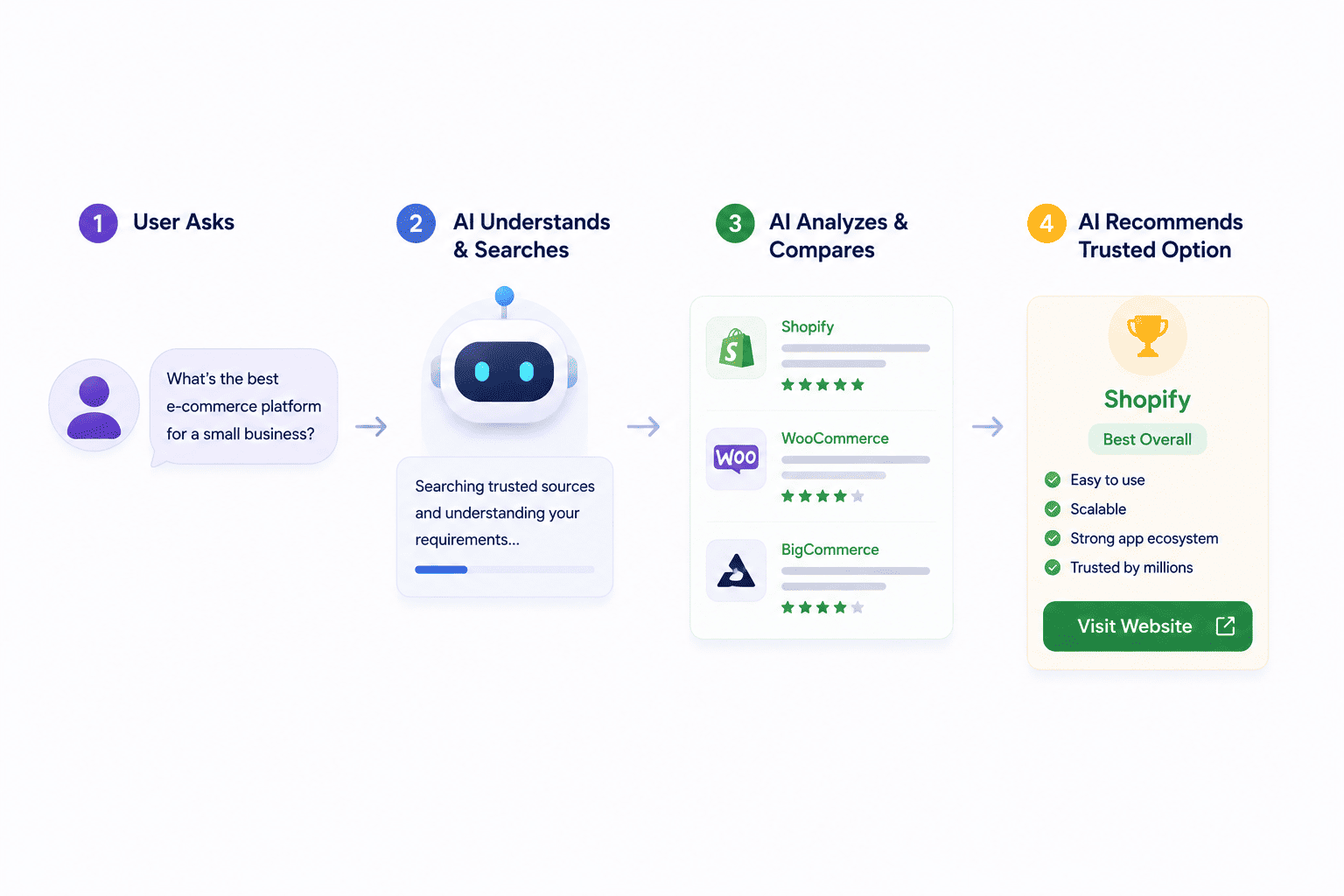
Conversational AI search journey from user question to trusted business recommendation.
Final Thoughts
GEO expands how businesses approach search. Focus on creating genuinely useful content, explaining your expertise clearly, keeping brand data uniform, and maintaining strong technical foundations.
Frequently Asked Questions
What is GEO?
Generative Engine Optimization (GEO) is the practice of structuring and optimizing online content so AI-powered search engines can accurately read, trust, and reference your business in generated responses.
Is GEO replacing SEO?
No. SEO and GEO complement each other. Traditional SEO drives website traffic from search engines, while GEO optimizes your visibility inside conversational AI tools.
How can a business start with GEO?
Focus on clear problem-solving content, consistent business profiles across the web, Schema markup implementation, and verified case studies detailing your real-world expertise.