Online shopping has traditionally followed a simple process: Search → Compare → Add to Cart → Checkout → Payment. But AI is beginning to change this journey.
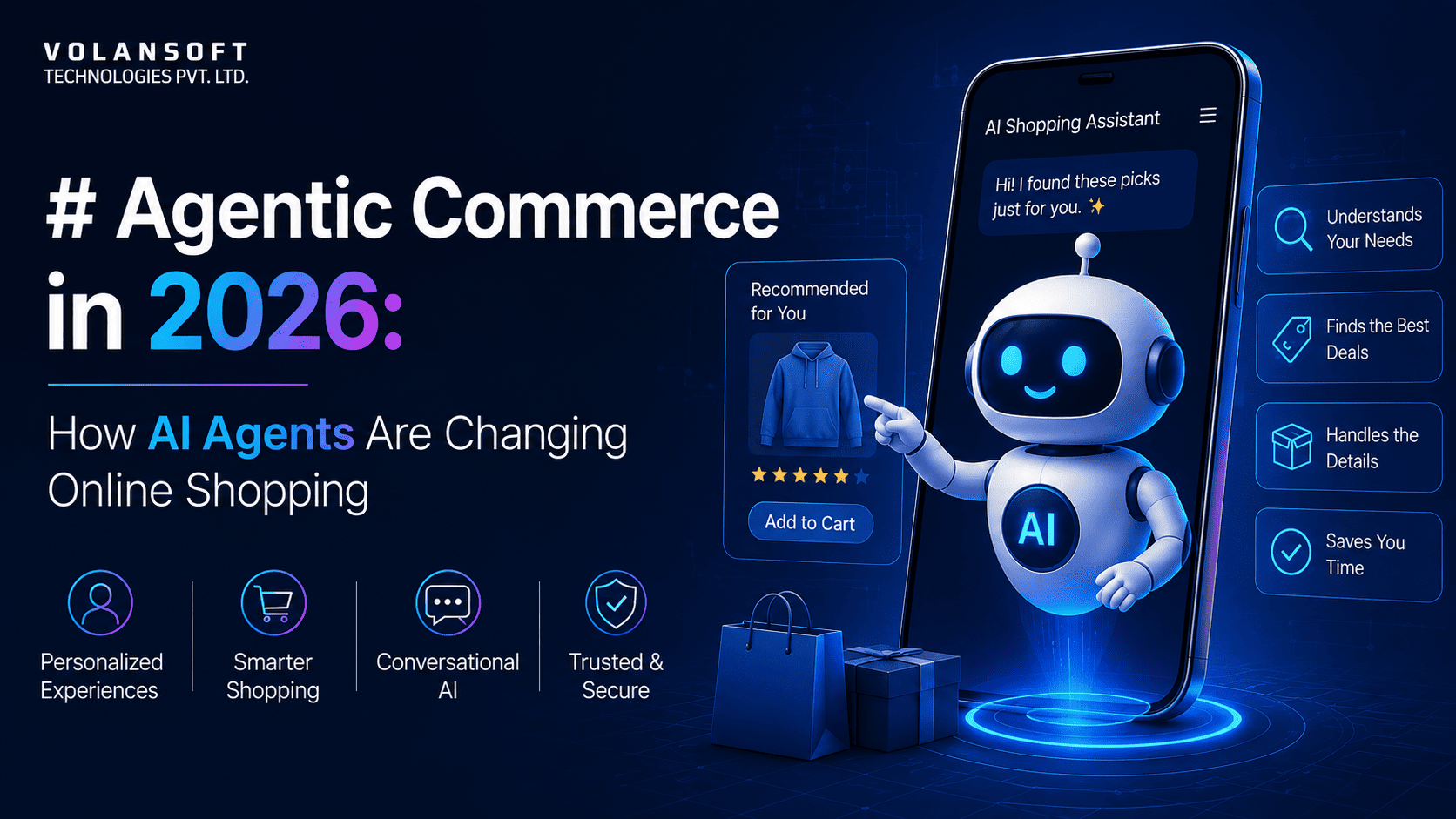
Instead of manually searching through dozens of products, customers can increasingly describe what they need to an AI assistant and let it help with research, comparison, recommendations, and parts of the purchasing process.
This shift is commonly referred to as Agentic Commerce.
In 2026, AI agents are becoming an important part of the evolving e-commerce ecosystem. For businesses, this means the traditional online storefront may no longer be the only place where customers discover and purchase products.
Let's understand what agentic commerce means, how it works, and what e-commerce businesses should do to prepare.
What Is Agentic Commerce?
Agentic commerce is an approach to online shopping where AI agents can perform tasks on behalf of customers. Instead of simply displaying information, an AI agent can potentially understand requirements, search and compare products, check prices, evaluate specs, recommend choices, add items to a cart, assist with checkout, and track orders.
For example, instead of searching "Best wireless headphones under ₹10,000", a customer might instruct an AI agent: "Find me comfortable wireless headphones under ₹10,000 with good battery life for working from home." The agent interprets intent, acting like a conversational assistant rather than a static search box.
Traditional E-commerce vs Agentic Commerce
Traditional e-commerce requires customers to navigate category pages, filters, and product details manually. Agentic commerce introduces an intelligent execution layer between the customer and the commerce engine.
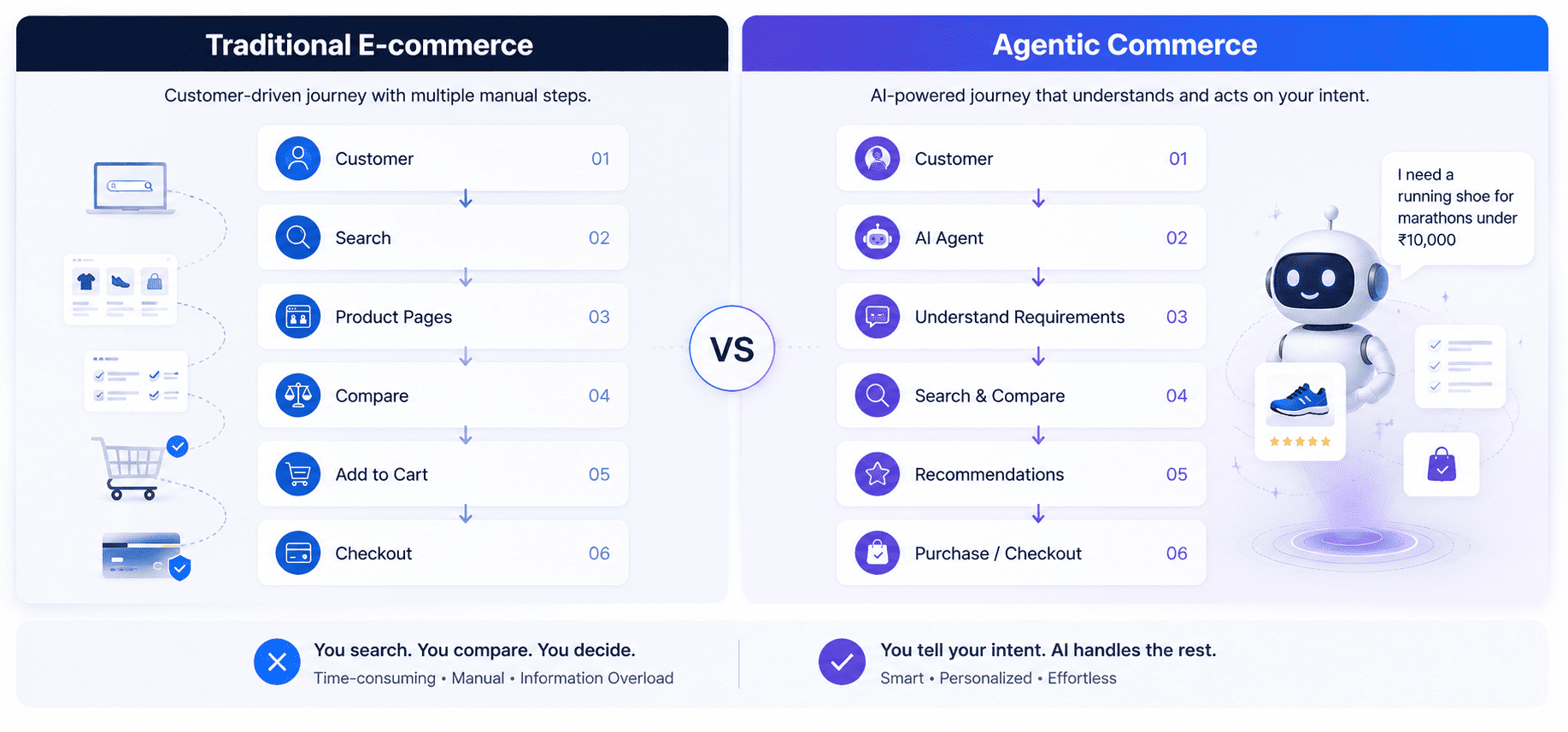
Traditional e-commerce shopping journey compared with an AI-driven agentic commerce journey.
Why Agentic Commerce Matters in 2026
Instead of forcing users to adapt to site navigation, agentic platforms allow direct natural-language communication. Customers skip repetitive steps like applying multiple filters and sorting columns—simply stating their precise needs makes discovery immediate, personalized, and efficient.
How Agentic Commerce Works
The AI agent acts as an orchestration layer connecting customer intent to underlying catalog, inventory, pricing, shipping, and payment systems. This is where API-first and headless commerce architectures become critical, enabling headless microservices to serve automated agent requests directly.
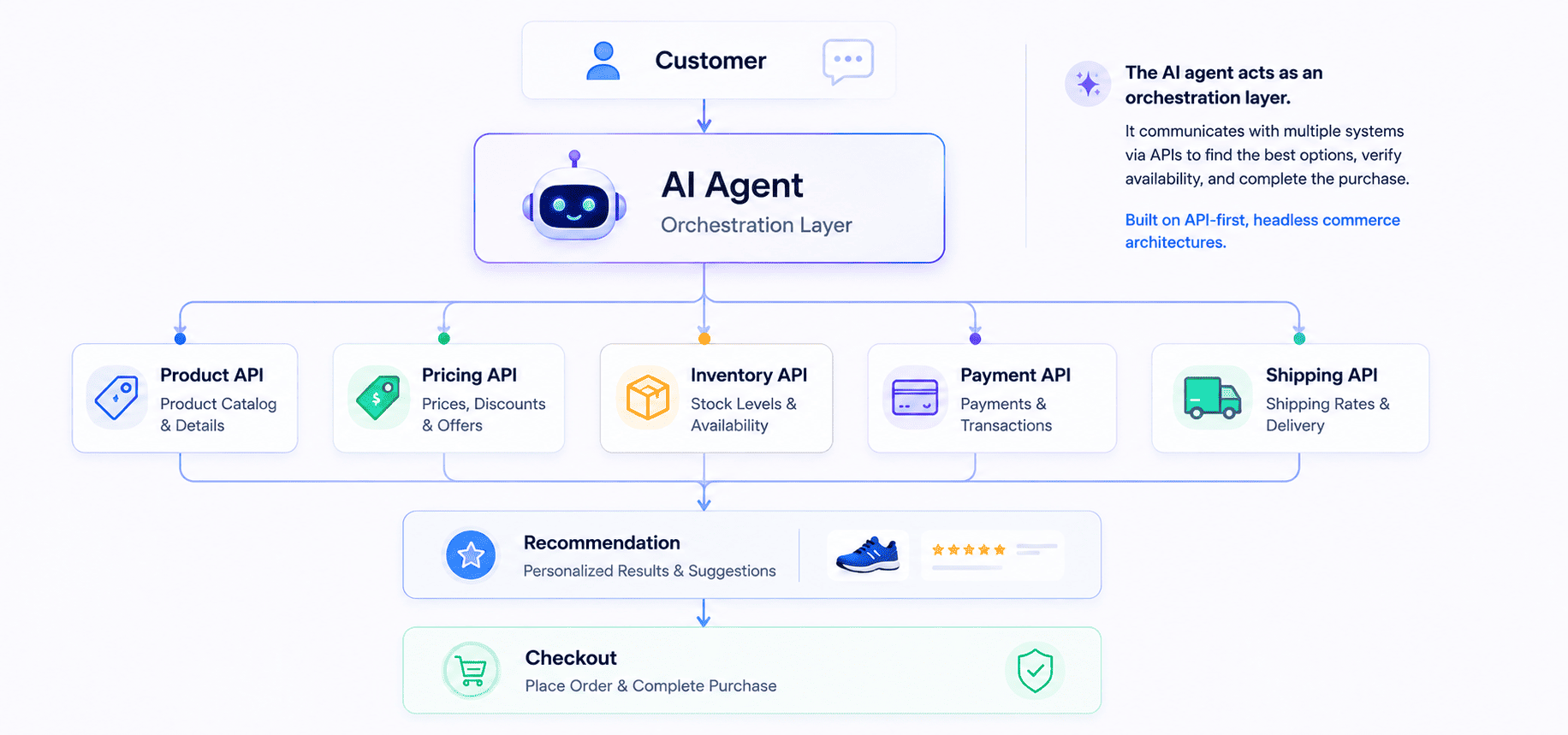
AI agent connected to product catalog, pricing, inventory, payment, shipping, and commerce APIs.
AI Agents Can Understand Intent
Multi-variable prompts like "I need a lightweight carry-on suitcase for a week-long trip with cabin size constraints" combine use cases, duration, dimensions, and material preferences. AI agents break down these natural-language prompts into structured queries instantly.
Personalization Becomes More Powerful
Traditional personalization relies heavily on static browsing history or demographics. AI agents unify historical purchase context with active conversational parameters to present hyper-tailored options matched specifically to real-time requirements.
What Agentic Commerce Means for E-commerce Businesses
Your store is no longer designed only for human eyes navigating visual interfaces—it must also be easily read by autonomous software agents. Businesses must maintain structured, high-integrity product data, including:
- Accurate product names and descriptions
- Detailed technical specifications and variants
- Real-time pricing, discounts, and inventory status
- Shipping constraints, return policies, and verified customer reviews
APIs and Headless Architecture Are Essential
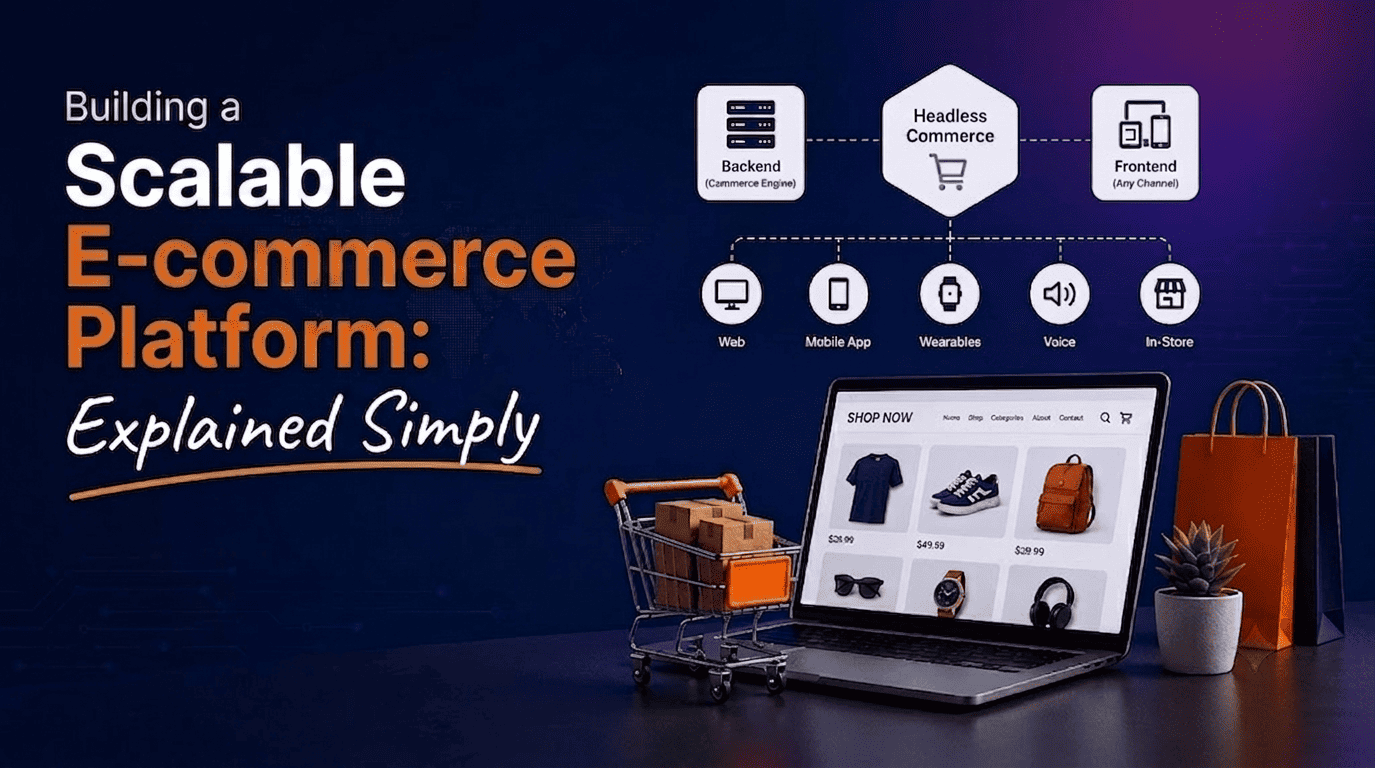
Agentic commerce pairs naturally with headless setups. Decoupling the commerce backend from traditional web templates allows one robust set of APIs to serve web apps, mobile apps, marketplaces, and autonomous AI agents simultaneously.
Challenges of Agentic Commerce
- Trust & Transparency: AI agents must offer clear rationale for why specific products are recommended.
- Data Accuracy: Out-of-sync inventory or incorrect pricing data breaks buyer trust immediately.
- Security & Authorization: Secure API endpoints, authenticated customer permissions, and tokenized payments are vital.
- Human-in-the-Loop Control: Financial transactions, address alterations, or order cancellations require explicit customer confirmation steps.
Preparing Your Business for Agentic Commerce
- 1. Clean & Structure Product Data: Ensure schemas, metadata, and product attributes are machine-readable.
- 2. Build API-First Architecture: Expose catalog, inventory, cart, and checkout functionalities securely via APIs.
- 3. Upgrade Site Search: Implement vector/semantic search to understand conversational natural language.
- 4. Harden Security: Protect APIs, user tokens, and payment workflows against unauthorized automated access.
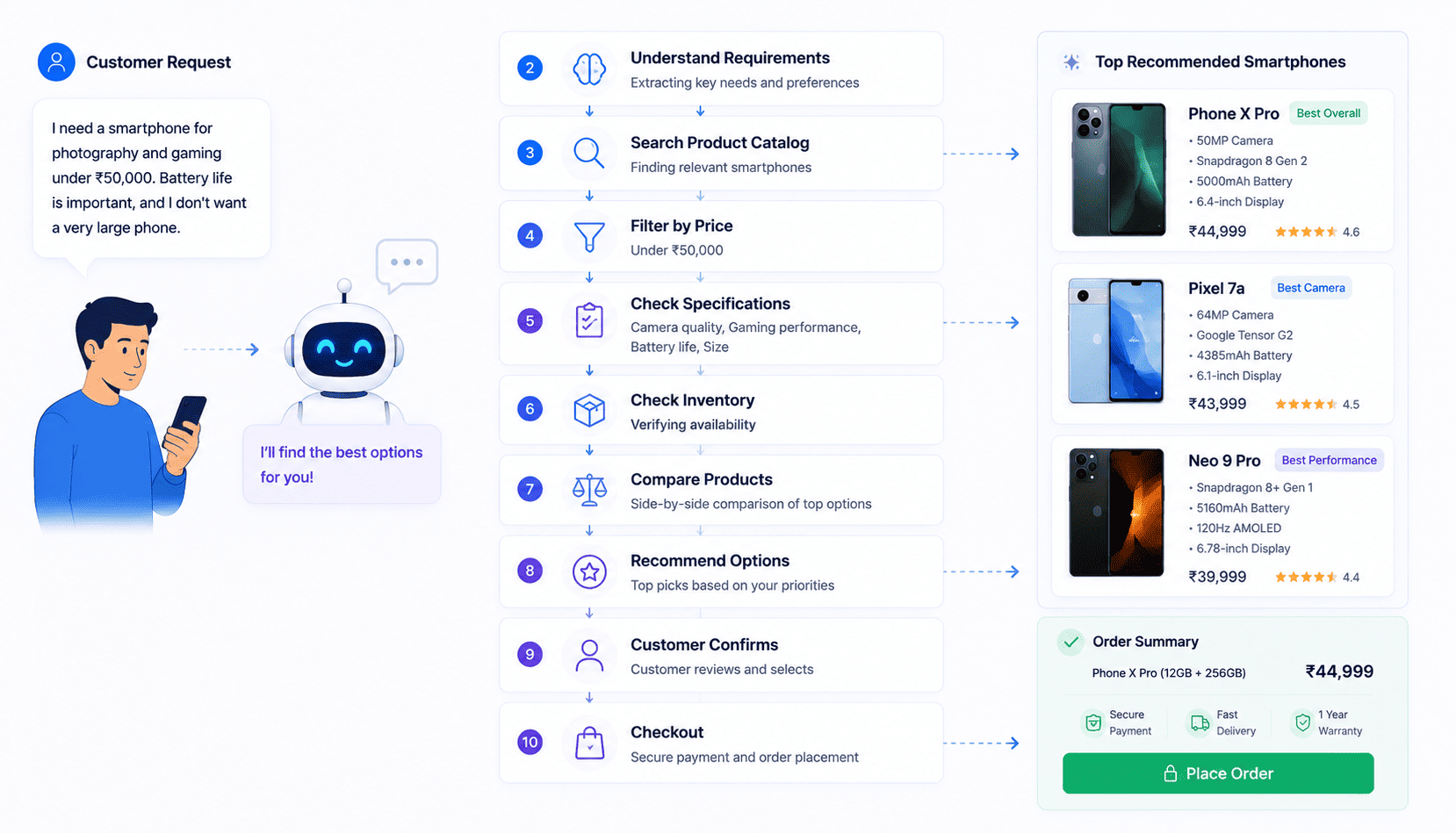
AI agent transforming a natural-language shopping request into product discovery, comparison, recommendation, and checkout.
The Future of Online Shopping
AI agents will eventually assist across the entire lifecycle—connecting product discovery, payment processing, shipping updates, order tracking, and post-purchase customer service seamlessly.
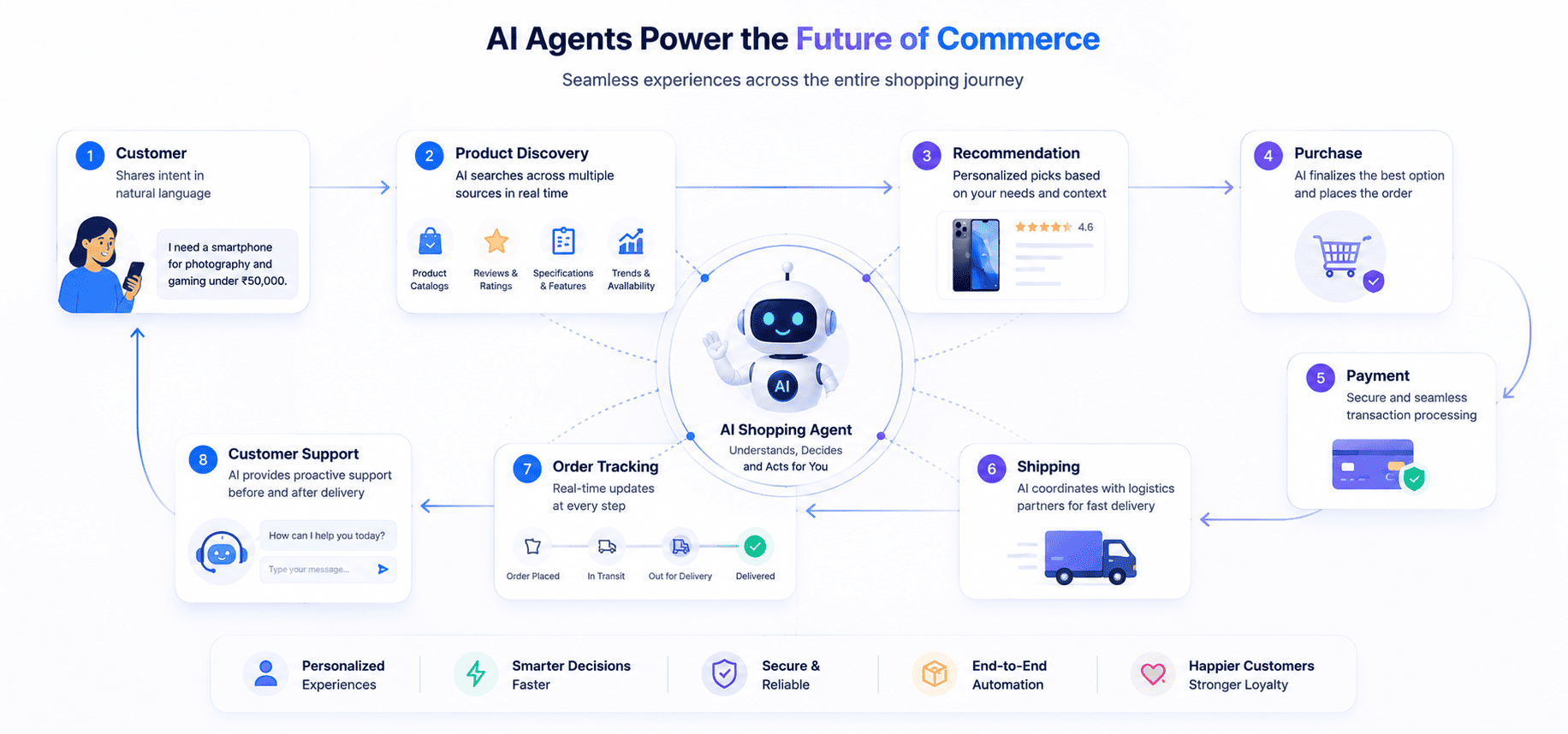
Future commerce ecosystem where AI agents connect discovery, shopping, payment, delivery, and customer support.
Final Thoughts
The ultimate value in agentic commerce isn't just "adding an AI chatbot"—it is building an API-first, data-rich, flexible, and secure backend that easily connects to modern conversational channels.
Frequently Asked Questions
What is agentic commerce?
Agentic commerce refers to an e-commerce model where autonomous AI agents assist or execute product search, comparison, recommendations, and purchases on behalf of users.
How does it differ from traditional e-commerce?
Traditional e-commerce requires buyers to manually browse websites and filter through listings. Agentic commerce allows natural-language interactions where AI handles discovery and comparison workflows.
Why is headless commerce critical for agentic AI?
Headless architecture decouples frontend interfaces from backend services, making catalog data, inventory levels, and payment gateways easily accessible to AI agents via APIs.
What should store owners do to prepare today?
Clean up product data schemas, build secure API-first backend integrations, introduce semantic AI search, and ensure strong API authentication protocols.